AI sessions
 Hone
Est. 5 minutes
Hone
Est. 5 minutes
The problem
This project started as a bit of a paradox. In some ways, it was a solution looking for a problem. Our customers love our live learning experiences and we had just closed out our first year with a successful new business model that made those classes vastly more accessible to learners. It would have made sense to continue leaning in there. In another way, AI sessions were the perfect solution to the overall problem set out in Hone's mission to democratizing access to top-tier learning and development.
Our live, cohort-based experiences were impactful and beloved by our admins and learners but not as scalable and accessible as we wanted. Learners needed a way to practice and get feedback at the exact moment they needed it without waiting for their next class.
While there were already several tools in the market offering simulated roleplays, none integrated those practice opportunities within a broader learning journey.
The research
We started with a cross-functional brainstorming session to explore how AI could help us scale personalized, accessible learning. The group included myself, our Head of Product, our CEO, our Learning Experience Designer, and our Engineering Manager. We aligned on an ideal learning journey that far outstripped what we knew our ultimate scope would be for an MVP, discussed which nodes in that journey had the potential to make a big impact on the business, and then sketched what it might look like to do work in those areas.
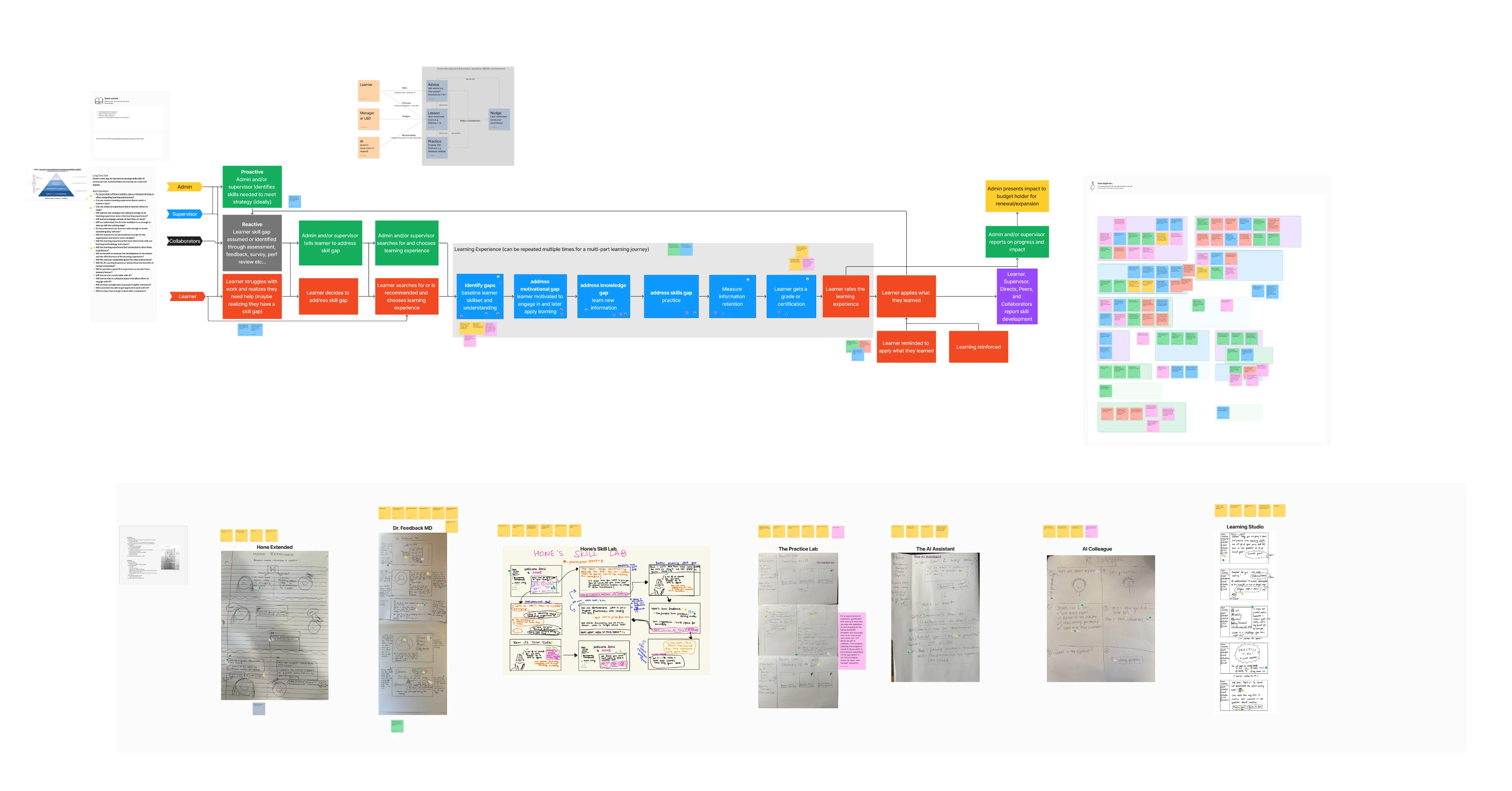
As a result of this session, we decided to focus our efforts on a new kind of learning experience, not just AI support for our existing classes. The biggest value bottleneck in our business was the inherent time and effort it took for learners to see benefit from those live classes, so it made sense to focus on an alternative delivery.
The solution
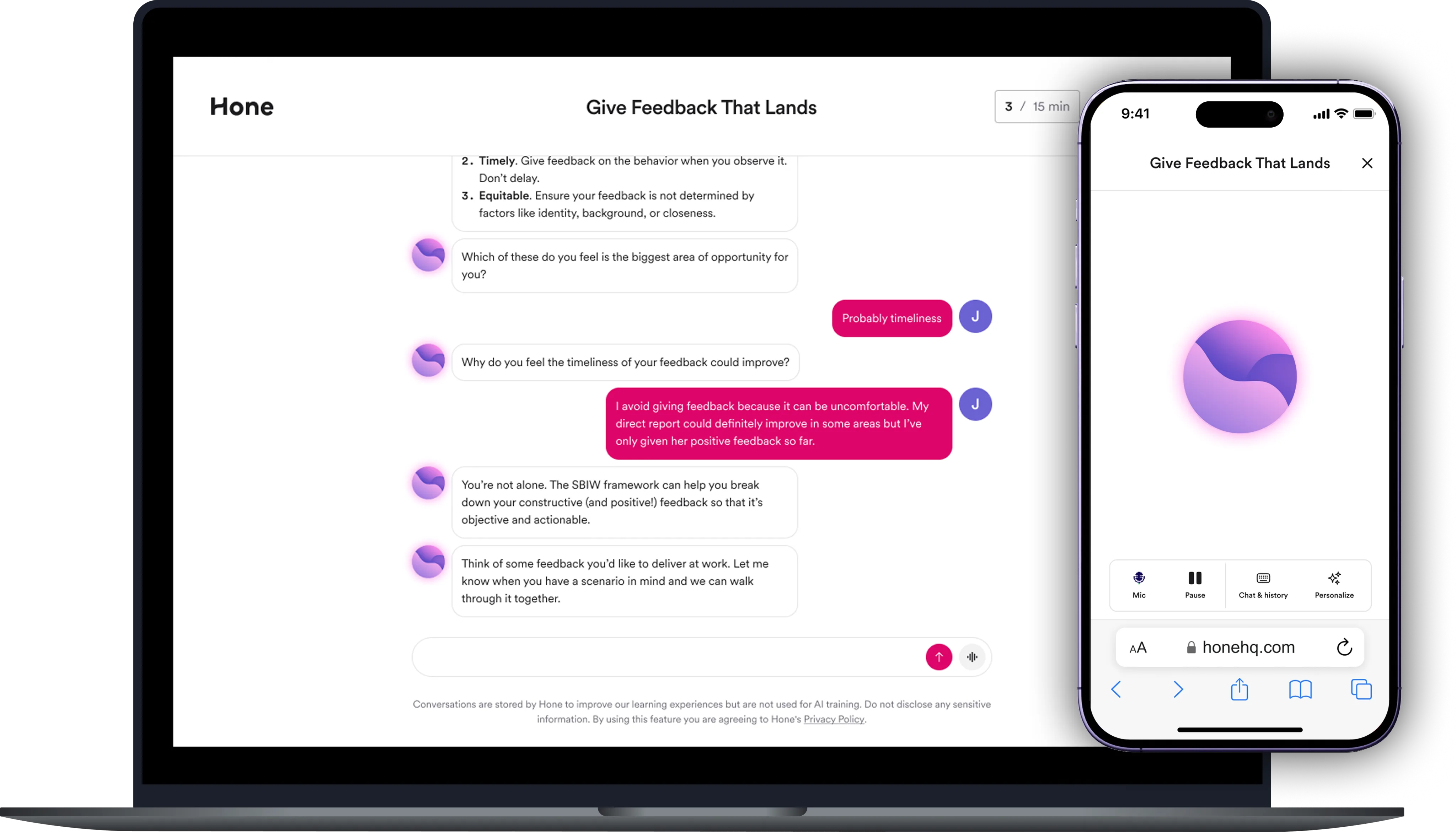
Our goal was to create a voice-first AI experience, similar to ChatGPT's voice mode but enhanced with visuals and learning content, covering similar topics to our live classes but focused on practice and personalization. Learners could engage with AI sessions when and how they wanted, receiving responses tailored to their understanding and experience level.
In addition, as a complement to our existing peer-driven learning experiences, this structure would give learners a psychologically safe space to make mistakes and ask questions before practicing alongside other learners in a live class.
The scope
AI sessions touched almost every corner of our product:
- The learner experience on both desktop and mobile
- Navigation and content browsing
- Admin reporting
- Learning content
- Even infrastructure- and security-level decisions around permissions and voice recording
We consciously decided to scope out open-ended AI coaching at the beginning (although we've since released this as well), keeping the focus on structured learning sessions with clear objectives and learning paths.
The process
Design & development
This was one of the most complex and cross-functional projects I've led. I shaped the product direction alongside our Head of Product and Product Manager, collaborated closely with engineering, and iterated continuously with our CEO.
Technical requirements shifted daily as the team worked out what was feasible, which meant design decisions sometimes needed to be revisited within hours. Getting to a customer-testable beta within a couple of months required constantly triaging what needed to be resolved immediately versus what could wait.
I also had to design and prototype interaction patterns entirely new to our product: from browser-based microphone permissions and voice playback to motion design for our AI avatar. Because design patterns in voice-first AI were (and still are) evolving rapidly, I spent time researching emerging trends to make sure we built something both familiar and forward-looking.
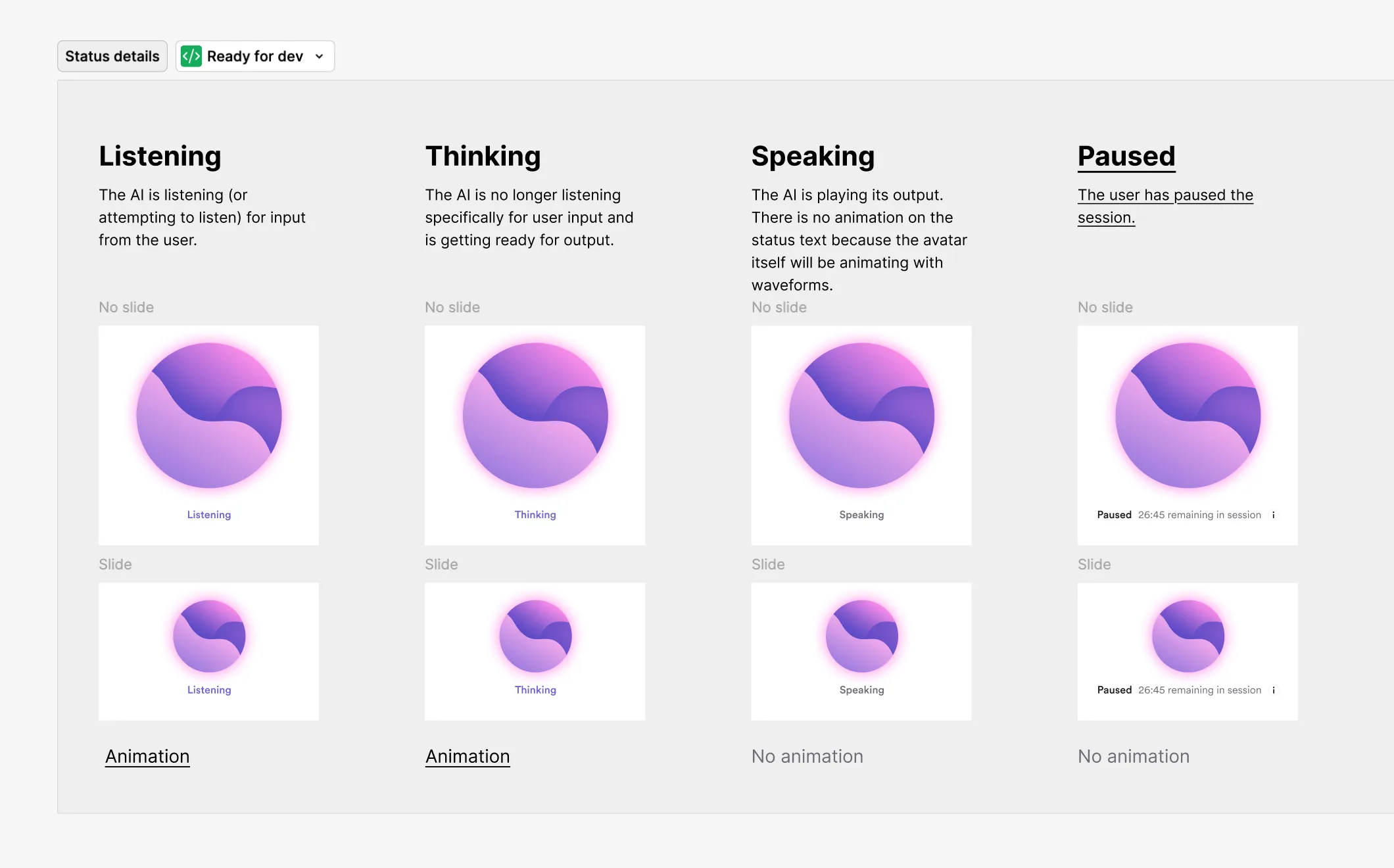
At any given moment, I was managing and iterating on 5+ interconnected mini-features at various stages of development, each needing clear flows, states, and visual polish to feel cohesive as one experience.
Testing
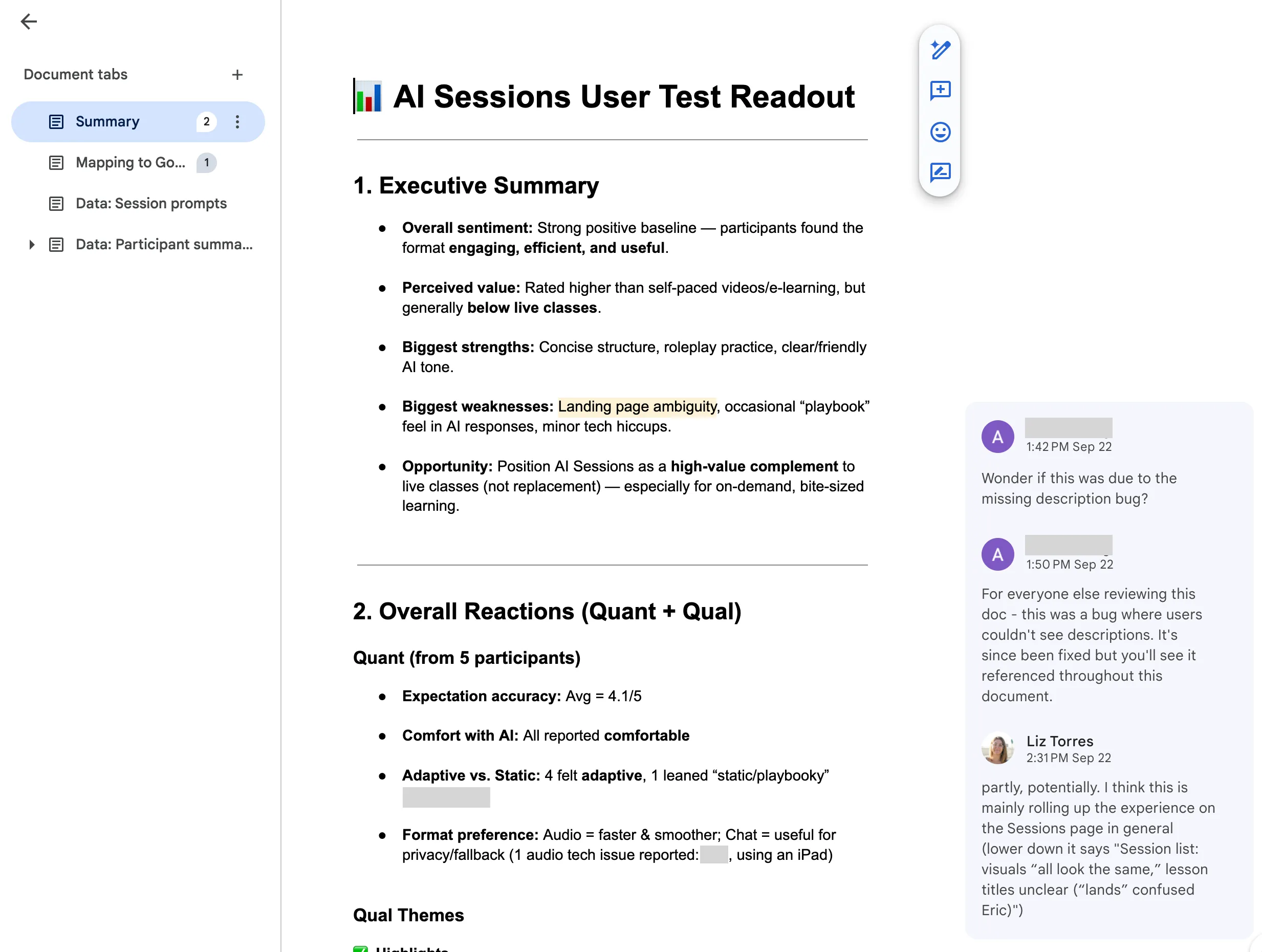
Early on, we engaged a small group of existing customer admins who agreed to test early versions of the experience. We began with recorded Zoom sessions, then evolved to async feedback as they tried the tool on their own. Feedback was both positive and constructive and validated both the concept and the direction of AI sessions at that early stage.
Once we were further along, we sourced a few small groups of people who broadly fit our customer profile (mainly desked workers, primarily people managers) but weren't existing Hone users. We gave them access to later versions of the AI session experience and conducted structured interviews and surveys to understand how intuitive it felt, what kinds of learning moments it supported best, and where it fell short. This was helpful in surfacing new UX improvements and prioritizing our near-term roadmap.
The aftermath
The response from early testers validated both the concept and the business case.
The first quarter after Hone AI's wide release became Hone's highest-ever NRR quarter, with 90%+ of renewals including Hone AI. No major competitor has replicated the lesson format.
Engagement followed a similar arc. Over the four months after launch, the share of eligible users actively using AI sessions grew from under 2% to over 5%, driven by learner flow redesigns, email experiments, and navigation improvements. NPS came in at 76 overall and 84 among standard and premium customers, on par with Hone's live classes, which set a high bar.
The clearest measure of impact came from customers themselves. One enterprise customer reported an 82% performance improvement among participants, tying the outcomes directly to what they'd practiced in AI sessions.
Since release, we've expanded to an open-ended AI Coach and embedded AI sessions into Membership programs, making them a core part of how Hone delivers learning at scale.